


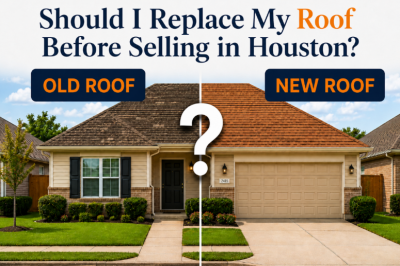
Not always. But if your roof is older, needs repairs, or could create insurance issues for the next buyer, it needs to be part of your listing strategy before your home ever hits the market.
For most Houston sellers, the question isn’t simply, “Should I replace the roof?” The better question is, “Will the roof help or hurt the sale?”
A newer roof can give buyers confidence, support a stronger list price, and serve as a valuable marketing point. An older roof, especially one nearing or past the 12-to-15-year mark, can create concerns about future repair costs, higher homeowners insurance costs, repair negotiations, and possible closing delays.
That does not mean every seller should pay for a full roof replacement before listing. It does mean you need a clear, proactive strategy before buyers, home inspectors, lenders, or insurance underwriters start asking questions.
We Usually Do Not Recommend a Pre-Listing Roof Inspection
This surprises many sellers, but we generally do not recommend ordering a formal roof inspection before listing unless there is already an obvious, known concern.
The reason is simple: if a seller becomes aware of a roof issue they previously did not know about, that information may need to be disclosed to potential buyers. A pre-listing roof inspection can create new disclosure obligations without necessarily solving the problem.
Instead, we recommend starting with what you already know:
- Roof age
- Prior repair history
- Past insurance claims for wind or hail
- Known leaks or ceiling stains
- Visible exterior wear
- Available warranty paperwork
- Whether the roof warranty is transferable
- How your roof compares visually to competing active listings
If there is an active leak, obvious damage, prior repair, or known roof issue, it should be handled properly and disclosed accurately. But in many cases, sellers are better served by evaluating the roof as part of an overall pricing and positioning strategy before ordering additional inspections.
Why Roof Age Matters More in Houston
Houston is hard on roofs. Heat, humidity, heavy rain, hail, wind, and tropical weather can all shorten the useful life of a roof.
Roof age also matters because homeowners insurance has become more challenging in many parts of Texas, especially in areas with higher storm exposure. Some insurance companies have tightened underwriting guidelines, limited coverage options, increased premiums, or changed how they value older roofs.
For Houston homes with roofs that are more than 12 to 15 years old, buyers may run into more questions from insurance companies. Depending on the roof’s age, condition, material, and claims history, a buyer could face higher premiums, limited coverage, additional underwriting requirements, or fewer available insurance options.
In some cases, an older roof may also be covered differently than a newer roof. For example, some policies may cover a roof based on actual cash value rather than full replacement cost, which means depreciation can reduce the amount paid on a future claim.
For a Houston buyer, an older roof is not just a future maintenance item. It can affect affordability, confidence, insurance options, and, in some cases, financing or closing timelines.
Repair, Replace, Credit, or Adjust the Price?
When dealing with an aging or worn roof, Houston sellers generally have four practical paths forward.
| Strategy | Best For | Major Pro | Major Con |
|---|---|---|---|
| Make known repairs | Roofs with minor, localized issues, such as a few loose shingles, cracked pipe boots, or worn flashing | Lower upfront cost and addresses obvious concerns before buyers inspect | Does not reset the roof age for insurance underwriting |
| Replace before listing | Roofs over 12 to 15 years old, visibly worn, actively leaking, or likely to create insurance concerns | Improves buyer confidence, strengthens marketing, and reduces repair negotiations | Requires a significant upfront cost, and the return is not always dollar for dollar |
| Offer a seller credit | Buyers who want control over contractor selection, materials, or timing | Avoids the seller managing the project before closing | Lender rules may limit credits, and it may not solve buyer insurance concerns |
| Adjust the list price | As-is sales or situations where the seller prefers not to make repairs | Fastest path to market with no upfront roof expense | May reduce the buyer pool and create more negotiation risk |
When Replacing the Roof Makes Strategic Sense
A pre-listing roof replacement can make sense when the existing roof is likely to become a major buyer objection, repair negotiation point, or insurance concern.
If your roof is near the end of its life, replacing it allows you to change the story before the home goes on the market. Instead of a buyer viewing the roof as a future expense, the seller can market it as a recent improvement.
A new roof does not always return 100 percent of its cost in pure profit, but it can help protect the sale by:
- Improving buyer confidence
- Reducing repair negotiations
- Making the home feel more move-in ready
- Supporting a stronger list price
- Giving your listing agent a clear marketing advantage
- Reducing uncertainty around insurance questions
In other words, a roof replacement is not always a profit project. Sometimes, it is a positioning and risk-reduction decision.
When You Probably Do Not Need to Replace the Roof
A roof replacement is not always the right move.
If the roof is newer, appears to be in solid condition, has no known leaks, and is unlikely to create insurance concerns for the next buyer, replacing it before listing may be unnecessary.
In some cases, it may make more sense to:
- Price the home with the roof age in mind
- Provide records for prior roof work
- Address known minor repairs
- Offer a seller credit, if appropriate
- Let the buyer evaluate the roof during their option period
The key is not to over-improve before listing. The goal is to understand whether the roof is likely to affect buyer confidence, insurance, pricing, repair negotiations, or closing timelines.
Hyperlocal Context Matters
The same roof can be perfectly acceptable in one Houston neighborhood or price point and a major drawback in another.
In established Houston communities like The Heights, Garden Oaks, Oak Forest, Timbergrove, Spring Branch, Memorial, and the Energy Corridor, buyers often pay close attention to big-ticket items. Roof age, HVAC age, drainage, electrical, plumbing, windows, and foundation history can all influence how buyers compare one home to another.
If nearby homes are coming to market with newer roofs or strong recent maintenance records, an older roof may stand out for the wrong reasons. If your home is priced appropriately and positioned correctly, however, buyers may be more willing to take on future roof work after closing.
That is why this decision should be based on more than roof age alone. It should also consider your neighborhood, price point, buyer pool, competition, timeline, and overall listing strategy.
The Bottom Line
You do not always have to replace your roof before selling your Houston home.
But you do need a roof strategy.
If your roof is newer and in solid condition, replacement may not be necessary. If it is older, needs repairs, difficult to insure, or likely to become a major repair negotiation point, replacing it before listing may help position the home more favorably.
A new roof can allow the seller to market the home with a stronger story, support a more confident list price, and turn a potential negative into a selling point.
Before making a financial commitment, consult with a local real estate professional who understands your neighborhood, current buyer expectations, recent competing sales, and insurance concerns that may affect the next buyer.
Not Sure If Your Roof Helps or Hurts Your Listing Strategy?
The Moore Real Estate Group can help you evaluate your options. We’ll compare nearby listings, review recent neighborhood sales, consider buyer expectations, and help you decide whether targeted repairs, strategic replacement, a seller credit, or precise pricing gives you the best path forward.
Thinking about selling your Houston home? Contact The Moore Real Estate Group for a home valuation and listing consultation.